About this programme
Occupational Therapy, theory, and approaches are constantly developing. With the increase in the average age and the number of people with disabilities and chronic conditions, there is a need for highly qualified occupational therapists. They should be better equipped to deal with complex situations in therapy, health promotion, and community development. During the international master Occupational Therapy, you will learn to evaluate, justify and innovate individual practice and services.
OT-Euromaster
Projects and stories

Programme structure
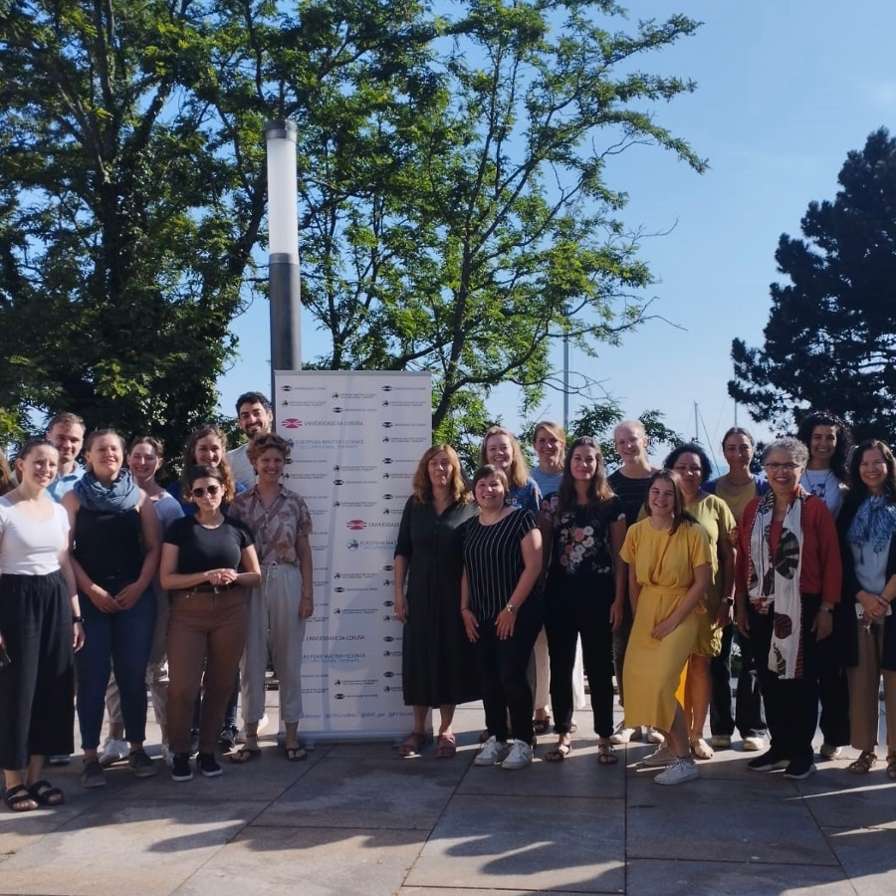
The postgraduate research-oriented programme consists of 6 modules, hosted by one of the partners in the consortium. The master is a truly international experience, you will visit 5 countries and get to know fellow students from all over the world. Collaborative learning approaches, such as Problem Based Learning, Learning Groups and an online discussion forum, are used.
A truly international experience!
- Year 1: modules 1-4
In Module 1 you will visit the United Kingdom and explore the concepts of occupation and research. In Module 2 you will go to the Netherlands and discover qualitative research methods and human occupation, diversity, culture, and participation. In Module 3 you will visit Switzerland and learn more about quantitative research methods in relation to the evaluation and enhancement of occupational performance. In Module 4 you will stay in Spain to uncover the socio-cultural perspectives of human occupation.
- Year 2: modules 5 and 6
Module 5 will take place in Sweden and contains planning a research project within the body of knowledge of the OT discipline. Module 6 will be in your own country and entails conducting a research project within the OT discipline.
Admission
BSc and English skills
You can apply if you have a Bachelor of Science degree in Occupational Therapy as well as strong written and verbal English skills. If you have a different qualification (lower than BSc) in Occupational Therapy, extra admission requirements apply.
Study load
28-40 hrs per week
The study load is 28 hrs per week while studying at home and 40 during classwork at the partner universities. The total study load is 2.520 hours leading to 90 ECTS credits. It is a postgraduate 2-year, part time programme. Many students do work parallel to studying; most of them between 50-70% (2,5 to 3,5 days per week).
Tuition
Tuition fees and expenses
The fee for EU/EEA citizens is € 2,209 for the 2022-2023 academic year. There are minor variations in fees for applications from Swiss and non-EEA citizens. Fees may increase slightly for the next academic year.
Why the Master of Science in Occupational Therapy?

- Get the chance to interact with internationally renowned faculties and like-minded professionals.
- Follow high-quality education at 5 participating universities, some of which are ranked at the top of Europe.
- Discover Occupational Therapy and Occupational Science from a cross-cultural point of view.
- Grow personally, professionally and as a researcher.
- Get the opportunity to visit several exciting European cities.
For whom?

- You are interested in international perspectives on Occupational Science and Occupational Therapy.
- You want to further develop your research skills.
- You want to know more about evaluating and innovating current practice.
- You are looking for new career perspectives both in your home country and abroad.